
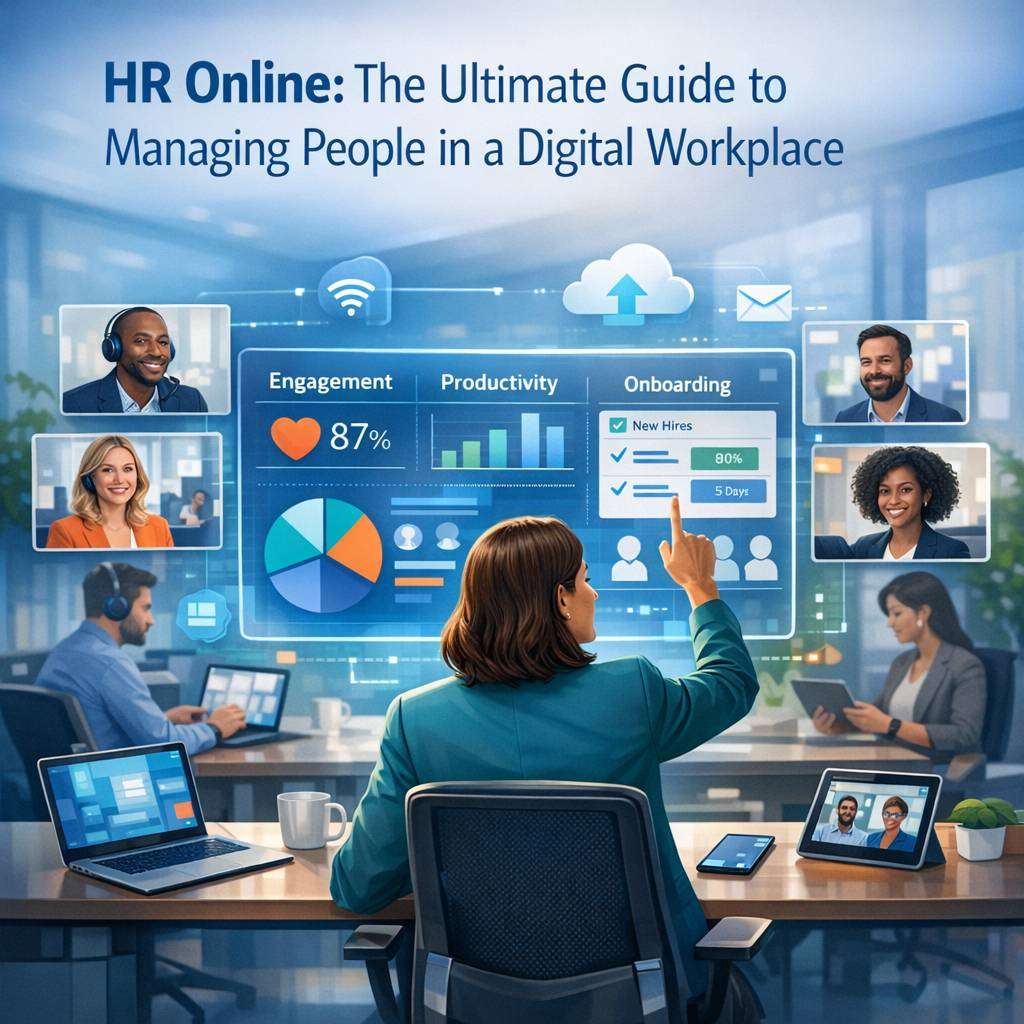
In today’s evolving business landscape, organisations are increasingly transitioning to digital workplaces where human resources (HR) functions are powered by advanced technology. HR online tools facilitate smarter decision-making, streamlined processes, and a more engaging employee experience. This guide provides a professional overview of how to manage people effectively in a digital environment, with practical insights for implementing HR systems, optimising online HR management, and sustaining organisational culture.
FAQ: HR Online
What does “HR online” mean?
HR online refers to human resources processes, tools, and services delivered via the internet or cloud-based platforms. This includes online payroll, benefits administration, recruitment, onboarding, performance management, and employee self-service portals.
What are the benefits of using HR online systems?
- Improved efficiency and automation of routine tasks
- Easier access to HR data for employees and managers
- Faster recruitment and onboarding
- Centralized compliance and record-keeping
- Enhanced reporting and analytics
- Scalable solutions for growing organizations
What features should I look for in an HR online platform?
- Payroll and benefits administration
- Time and attendance tracking
- Recruiting and onboarding
- Performance management and learning
- Employee self-service portal
- Compliance management and audit trails
- Data security and access controls
- Integrations with your existing tools (CRM, accounting, etc.)
How secure is HR online data?
Secure HR online platforms use encryption in transit and at rest, role-based access controls, multi-factor authentication, regular security audits, and compliance with standards such as GDPR, HIPAA (where applicable), and SOC 2. Always review the vendor’s security whitepaper and data ownership terms.
Can HR online help with compliance?
Yes. Many platforms provide built-in compliance modules, updated tax rules, labour law alerts, audit trails, and configurable workflows to help you stay compliant with local, state, and national regulations.
Is HR online suitable for small businesses?
Absolutely. Many HR online solutions are designed for small to mid-sized businesses, offering scalable plans, affordable pricing, and quick deployment with templates and guided setup.
How do I migrate from paper-based HR to an online system?
- Define requirements and select a platform
- Map existing data and clean records
- Plan data migration with a test run
- Train administrators and users
- Run parallel processes during the transition
- Go live and monitor for issues
- Establish data governance and regular backups
What about employee onboarding in an HR online system?
HR online platforms typically provide digital onboarding workflows, welcome emails, document e-signatures, task lists for new hires, automated provisioning (accounts and access), and orientation checklists.
Can I customise an HR online platform for my company?
Most platforms offer customisation options such as custom fields, workflows, approval routing, branding, role-based access, and reporting. Check for API access and available integrations if you have unique needs.
How long does it take to implement an HR online solution?
Implementation time varies by complexity, data quality, and vendor readiness. A basic setup can be completed in a few weeks, while larger deployments with custom workflows may take several months. Ask for a project plan and onboarding support during procurement.
Do HR online systems support mobile access?
Yes. Most modern HR online platforms offer mobile apps or responsive web interfaces so employees and managers can access HR tasks anytime, anywhere.
What is the cost structure for HR online tools?
Costs typically include a per-employee-per-month fee, with potential setup fees, add-ons, and tiered pricing. Some vendors offer annual billing discounts. Always review bundled features vs. add-ons to understand total cost of ownership.
How do I choose the right HR online vendor?
- Define your must-have features and must-not-haves
- Consider company size, industry, and growth plans
- Evaluate user experience and adoption support
- Check security, compliance, and data ownership terms
- Compare integrations with your existing tools
- Request a trial or live demo and read customer reviews
- Review SLAs, support levels, and implementation timelines
Can I integrate HR online with payroll systems?
Yes. Many HR online platforms integrate with payroll providers and accounting software to automate payroll processing, tax filings, and benefits remittance. Ensure the vendor supports your region and tax rules.
What kind of support is available after implementation?
Support options typically include online knowledge bases, community forums, email/ticket-based support, phone support, and dedicated account management or customer success teams. Some vendors offer onboarding workshops and training sessions.
How do I measure success after moving HR online?
- Time-to-fill and quality of hires
- HR process cycle times (onboarding, off-boarding, approvals)
- Employee engagement and self-service usage
- Data accuracy and reporting reliability
- Compliance incidents and audit findings
- Return on investment (ROI) and total cost of ownership
If you’d like, I can tailor this FAQ to a specific HR online platform or industry.
The shift to a digital workplace
Digital transformation has moved beyond the automation of repetitive tasks to the strategic management of talent. A digital workplace integrates collaboration platforms, performance analytics, learning management systems, and intelligent HR software to create a connected ecosystem. The result is improved transparency, real-time insights, and a greater capacity to respond to changing business needs.
Key benefits include faster onboarding, consistent policy enforcement, scalable performance management, and enhanced engagement. However, the transition also introduces challenges, such as data privacy considerations, change fatigue among staff, and the need for robust digital literacy across the workforce. A thoughtful plan that aligns technology with people strategies is essential.
Selecting and implementing HR systems
Choosing the right HR systems is foundational to effective Online HR management. Consider a modular approach that aligns with organisational size, growth trajectory, and industry requirements. Critical components typically include:
- Core HR and payroll: Accurate personnel records, time and attendance, leave management, payslips, and statutory reporting.
- Talent management: Competency frameworks, performance reviews, succession planning, and career development paths.
- Recruitment and onboarding: Applicant tracking, digital onboarding workflows, and candidate experience metrics.
- Learning and development: Access to courses, personalised development plans, and compliance training.
- Analytics and reporting: Dashboards, predictive insights, and data-driven decision-making.
- Employee self-service: Intuitive portals for HR-related tasks, benefits, and policy access.
When implementing HR online tools, emphasise data governance, user adoption, and integration with existing systems such as finance or ERP platforms. Vendor selection should include security certifications, support SLAs, and a clear data residency policy to ensure compliance with relevant regulations.
Online HR management: operations and processes
Effective Online HR management is built on well-designed processes that leverage automation without compromising the human touch. Core areas to optimise include:
- Recruitment and onboarding: Streamlined candidate journeys, customised welcome packs, and structured onboarding checklists help new hires become productive quickly. Automation can handle scheduling, document collection, and initial training assignments.
- Performance and development: Regular feedback loops, objective-based reviews, and development plans aligned with business strategy. Real-time analytics highlight high‑potential employees and skill gaps.
- Employee relations: Clear channels for communicating policies, handling grievances, and conducting confidential surveys to gauge engagement and morale.
- Compensation and benefits: Transparent pay structures, automated payroll processing, and benefits administration that integrates with time and attendance data.
- Compliance and risk management: Track regulatory requirements, maintain audit trails, and enforce policy changes across the organisation.
A successful online HR strategy blends self-service capabilities with proactive HR interventions. Self-service reduces administrative burden while giving employees control over their information, career development, and benefits. At the same time, HR must remain proactive in coaching managers, identifying risks, and driving cultural alignment.
Discover practical HR solutions with HR online, designed to streamline people management and boost workforce productivity. Accessible, intuitive tools help you manage payroll, recruitment, and compliance efficiently. This platform empowers HR teams to deliver faster, clearer communications, improved employee engagement, and measurable results. Explore features, support, and insights that simplify your HR operations today.
Data governance and privacy
With HR systems handling sensitive personal data, data governance is non-negotiable. Establish clear data stewardship roles, data classification schemes, and access controls that follow the principle of least privilege. Implement data retention policies, secure backups, encryption at rest and in transit, and routine security audits. Privacy-by-design principles should be embedded in every HR online process, from recruitment to offboarding. Transparency with employees about how their data is managed builds trust and supports compliance with data protection laws.
Driving user adoption and change management
A common pitfall in online HR management is underestimating the human factor. Technology alone cannot achieve desired outcomes without broad adoption. Develop a comprehensive change management plan that includes:
- Stakeholder mapping and executive sponsorship to champion the initiative.
- Clear communication outlining benefits, timelines, and what stays the same.
- Training programs tailored to different roles, with hands-on practice and easy-to-access resources.
- A phased rollout approach, starting with pilot teams to gather feedback and iterate.
- Ongoing support, champions networks, and accessible help desks.
Measuring adoption through metrics such as active users, completion rates for mandatory modules, and time-to-competency for new hires helps refine the implementation and proves value to the organisation.
HR online resources streamline workforce management, boosting efficiency and compliance for modern teams. Businesses shifting to digital HR platforms report faster onboarding, brighter analytics, and centralized data, reducing manual tasks and errors. When considering scalable solutions, compare features, security, and user experience. For more information, visit https://www.hibob.com/ to explore innovative, cloud-based HR online tools.
Enhancing employee experience in a digital environment
The digital workplace should not be a barrier to human connection. Online HR management can enhance the employee experience by:
- Personalised journeys: Tailored onboarding, development plans, and recognition programmes that align with individual aspirations.
- Collaboration-enabled culture: Integrating communication tools, project spaces, and social recognition to foster a sense of belonging.
- Feedback-driven improvement: Regular pulse surveys and sentiment analysis to identify areas for improvement and act promptly.
- Agile performance management: Flexible cycles, continuous feedback, and goal realignment in response to business needs.
Leadership plays a crucial role in modelling digital maturity. Managers who leverage analytics to support their teams, provide constructive feedback, and recognise achievements contribute to higher engagement and retention.
Metrics and continuous improvement
A data-informed approach is essential for sustaining progress. Focus on a balanced scorecard of metrics, including:
- Recruitment efficiency: Time-to-fill, cost-per-hire, offer acceptance rate.
- Onboarding effectiveness: New-hire ramp-up time, early performance indicators, and retention at 90 days.
- Employee engagement: Response rates to surveys, engagement index scores, and sentiment trends.
- Performance outcomes: Goal attainment, calibration consistency, and development plan completion.
- Compliance and risk metrics: Policy adherence, audit findings, and training completions.
Regular reviews of these metrics, coupled with qualitative feedback, enable continuous improvement. Use iterative cycles to refine processes, enhance user experience, and maximise ROI from HR online investments.
HR online solutions streamline hiring, onboarding, and performance for modern teams. With scalable tools, HR online platforms unify data, automate processes, and provide real-time insights that drive better decisions. Access a trusted option here: https://www.peoplehr.com/en-gb/hr-systems/. From talent management to compliance, these systems boost efficiency, boost engagement, and free administrators to focus on people, culture, and strategic growth. Embrace accessible HR online today.
Building a future-ready HR function
To stay ahead in a digital workplace, organisations should cultivate a robust HR tech strategy aligned with business objectives. Priorities include:
- Investing in scalable, secure HR systems that support remote and hybrid work.
- Emphasising data literacy across the HR team and the broader staff base.
- Integrating HR online platforms with other enterprise systems for a unified data ecosystem.
- Fostering a culture of continuous learning, psychological safety, and inclusive leadership.
- Regularly reviewing governance, privacy, and cyber resilience to protect employee data.
By embracing Online HR management as a strategic capability rather than a purely administrative function, HR leaders can drive meaningful outcomes—improved productivity, better talent retention, and a resilient organisational culture.
HR online is more than software; it is a holistic approach to managing people in a digital era. Through thoughtful selection of HR systems, careful attention to data governance, and a relentless focus on the employee experience, organisations can unlock the full potential of their people in a virtual-first world.