
A robust purchasing order system streamlines procurement, reduces errors, and improves vendor accountability. It centralizes requisitions, automates approvals, and tracks status from request to receipt, ensuring timely inventory replenishment. This leads to better budgeting, enhanced compliance, and faster decision-making for your business. See how a cloud-based solution can transform operations at https://cloudb2b.co.uk/ and simplify supplier collaboration. By integrating real-time data and secure document management, your purchasing cycle becomes transparent, efficient, and scalable for growth.
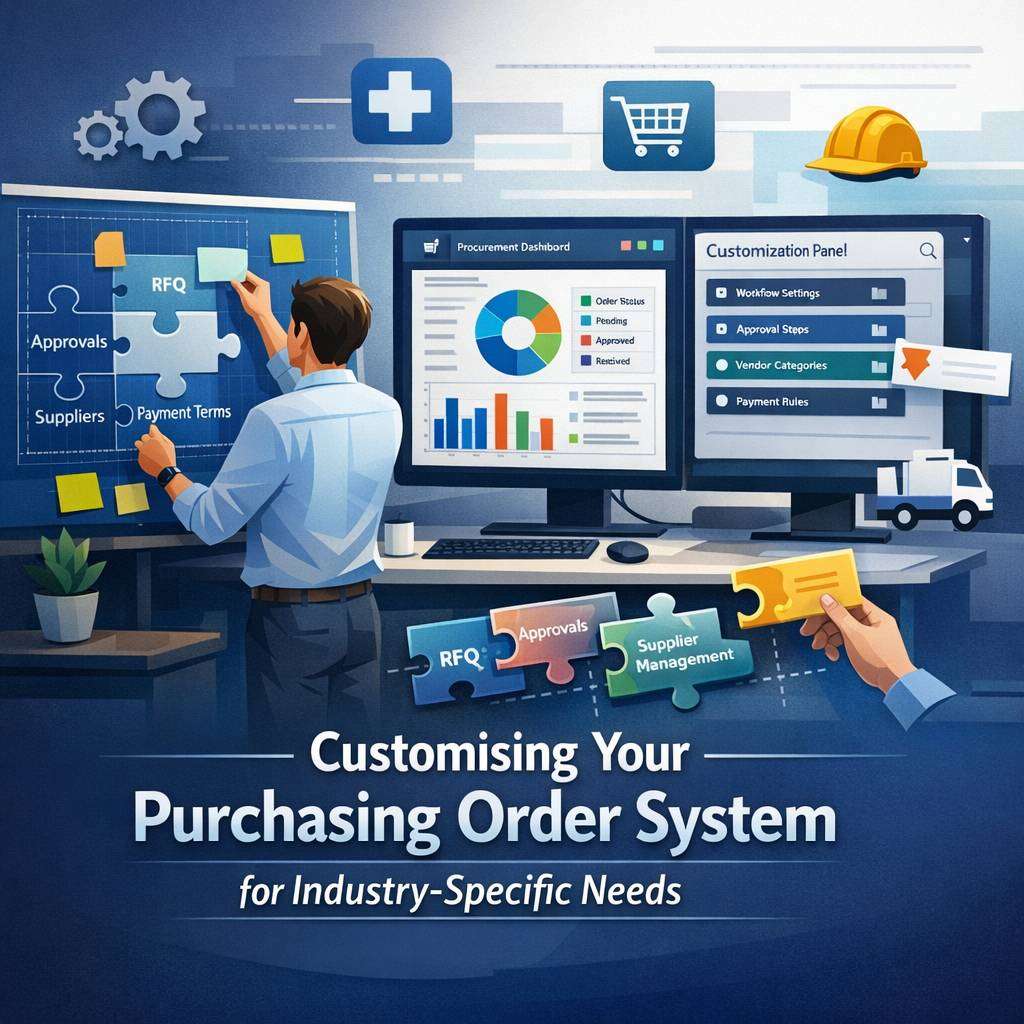
In today’s competitive landscape, businesses rely on efficient procurement processes to control costs, manage supplier relationships, and maintain regulatory compliance. A well-configured po system can deliver these benefits, but generic solutions often fall short of the unique demands of different industries. Customising your purchase order system to align with industry-specific workflows can unlock measurable improvements in accuracy, speed, and governance.
Understanding the value of a tailored po system
A purchase order system is not a one-size-fits-all tool. While core functions such as creating, approving, and tracking purchase orders remain constant, the nuances of your sector—whether manufacturing, healthcare, construction, or hospitality—drive requirements for data fields, approval hierarchies, and integration needs. By tailoring a software purchase order solution, you can:
- Enforce industry-specific validation rules to prevent costly errors.
- Align approval workflows with regulatory and contractual obligations.
- Streamline supplier onboarding and performance monitoring.
- Integrate with existing ERP, inventory, or project management systems for end-to-end visibility.
Assess your industry workflow and data needs
Begin by mapping your end-to-end procurement process. Key questions include:
- What are the most common PO types in your industry (spot buys, blanket agreements, service orders, capital purchases)?
- Which stakeholders need to review and approve POs, and at what thresholds?
- What data fields are essential (part numbers, unit of measure, compliance certificates, batch/lot tracking, warranties, transit times)?
- Are there regulatory or safety requirements that must be reflected in every PO?
- How should supplier performance be measured and reported?
Documenting these aspects guides the configuration of your po system for optimal alignment with real-world practice.
A purchasing order system streamlines procurement, enhances visibility, and reduces manual errors across departments. By centralizing requisitions, approvals, and supplier communications, it accelerates cycle times and tracks spend effortlessly. For businesses seeking efficiency, consider purchasing order system to automate workflows, improve compliance, and gain real-time procurement insights. Implementing a robust solution supports smarter decisions, control, and scalable growth.
Customisation options within a po system for industry needs
Many po system software offerings provide a spectrum of customisation options. Consider the following capabilities when selecting and configuring a system:
-
Field configurations and templates: Create industry-specific PO templates with mandatory fields (e.g., batch numbers for pharmaceutical suppliers or hazard classifications for chemical goods) to ensure consistent data capture.
-
Approval workflows: Design multi-tiered, role-based approval processes that reflect procurement governance in your sector. Dynamic routing can escalate POs based on spend thresholds, supplier risk, or project stage.
-
Contract and blanket order management: Support blanket orders or framework agreements prevalent in industries with long-term supplier engagements. Tie POs to contracts to automate pricing, term validation, and usage tracking.
-
Supplier management and onboarding: Implement supplier qualification screens, compliance checks, and performance scoring. This is particularly valuable in regulated sectors where supplier attestations or audit readiness matter.
-
Compliance and risk controls: Enforce regulatory checks (e.g., anti-bribery, environmental sustainability standards, data protection requirements) within the po system to reduce non-compliant spend.
-
Material and inventory integration: For manufacturing or logistics, integrate with inventory management and bill-of-materials (BOM) data. This ensures correct part numbers, lead times, and stock levels are reflected on each PO.
-
Serialization and traceability: In sectors like healthcare or aerospace, enable serialisation, lot tracing, and audit trails to support traceability requirements.
-
Receiving and quality control ties: Connect PO data to receiving inspections, quality checks, and non-conformance workflows so procurement aligns with production quality.
-
Reporting and analytics: Build industry-specific dashboards that show supplier performance, delivery reliability, cost savings, and spend under management in meaningful formats.
-
E-procurement and supplier portals: Provide suppliers with dedicated portals for electronic invoicing, acknowledgments, and collaboration, which can be particularly beneficial in complex supply chains.
-
Mobile and offline capabilities: Field-based procurement (construction sites, remote locations) benefits from mobile PO creation, approvals, and acceptance with offline mode and later synchronization.
Field configurations and templates: Create industry-specific PO templates with mandatory fields (e.g., batch numbers for pharmaceutical suppliers or hazard classifications for chemical goods) to ensure consistent data capture.
Approval workflows: Design multi-tiered, role-based approval processes that reflect procurement governance in your sector. Dynamic routing can escalate POs based on spend thresholds, supplier risk, or project stage.
Contract and blanket order management: Support blanket orders or framework agreements prevalent in industries with long-term supplier engagements. Tie POs to contracts to automate pricing, term validation, and usage tracking.
Supplier management and onboarding: Implement supplier qualification screens, compliance checks, and performance scoring. This is particularly valuable in regulated sectors where supplier attestations or audit readiness matter.
Compliance and risk controls: Enforce regulatory checks (e.g., anti-bribery, environmental sustainability standards, data protection requirements) within the po system to reduce non-compliant spend.
Material and inventory integration: For manufacturing or logistics, integrate with inventory management and bill-of-materials (BOM) data. This ensures correct part numbers, lead times, and stock levels are reflected on each PO.
Serialization and traceability: In sectors like healthcare or aerospace, enable serialisation, lot tracing, and audit trails to support traceability requirements.
Receiving and quality control ties: Connect PO data to receiving inspections, quality checks, and non-conformance workflows so procurement aligns with production quality.
Reporting and analytics: Build industry-specific dashboards that show supplier performance, delivery reliability, cost savings, and spend under management in meaningful formats.
E-procurement and supplier portals: Provide suppliers with dedicated portals for electronic invoicing, acknowledgments, and collaboration, which can be particularly beneficial in complex supply chains.
Mobile and offline capabilities: Field-based procurement (construction sites, remote locations) benefits from mobile PO creation, approvals, and acceptance with offline mode and later synchronization.
Integrating with other systems and data sources
A successful purchase order system seldom operates in isolation. Consider integration points that enhance industry-specific workflows:
- ERP and finance: Seamless posting of PO data into accounting modules, GR/IR reconciliation, and payment workflows.
- Inventory and warehouse management: Real-time stock status influences PO quantities and timing.
- Project management: Linking POs to projects or work orders provides visibility into cost control and spend against budgets.
- Compliance databases: Connect to supplier risk, sanctions, or environmental databases for ongoing screening.
- MES and production systems: For manufacturing, integration can sync BOM, routing, and lead-time data with purchasing.
Structured data exchange via APIs or EDI can reduce manual entry and errors, a critical advantage in high-velocity industries.
Governance, controls, and change management
Customising a po system demands a governance approach to maintain control as requirements evolve. Practical steps include:
- Stakeholder workshops: Gather input from procurement, legal, compliance, finance, and operations to capture diverse needs.
- Change control processes: Establish a formal process for approving configuration changes, ensuring traceability.
- Pilot testing: Run industry-specific scenarios with real-world data before rolling out improvements.
- Training and enablement: Provide role-based training, quick-start guides, and ongoing coaching to embed new processes.
- Documentation: Maintain clear process diagrams, field definitions, and approval rules to ensure continuity.
Measuring success and continuous improvement
Define clear metrics to evaluate the impact of your customised po system. Useful measures include:
- Purchase cycle time: Time from requisition to approved PO.
- Compliance rate: Percentage of POs meeting mandatory data fields and approvals.
- Spend under management: Share of spend governed by the procurement policy.
- Supplier performance: On-time deliveries, quality measures, and flexibility during demand shifts.
- Inventory accuracy: Alignment between PO receipts and stock levels.
Regular reviews help identify bottlenecks and opportunities for refinement, ensuring the system remains aligned with evolving industry needs.
Selecting the right solution
When evaluating po system software, consider:
- Industry relevance: Does the provider offer industry-focused features or templates?
- Flexibility: How easily can you adapt workflows, fields, and rules without custom development?
- Scale and governance: Can the system handle your current volume and future growth while enforcing controls?
- Integration breadth: Are essential systems (ERP, WMS, MES) supported out of the box?
- Total cost of ownership: Consider licensing, implementation, training, and ongoing maintenance.
A robust po system for small business can deliver enterprise-grade controls without excessive complexity, provided it supports scalable customisation and thoughtful governance.
By customising your purchasing order system to reflect your industry’s unique needs, you create a procurement engine that drives accuracy, efficiency, and strategic value. A well-tailored purchase order system is not merely a tool for raising orders; it is a strategic asset that underpins reliable supply, cost discipline, and compliant operations. Embrace industry-specific configurations, maintain disciplined governance, and continuously refine your workflows to realise the full potential of your po system.