

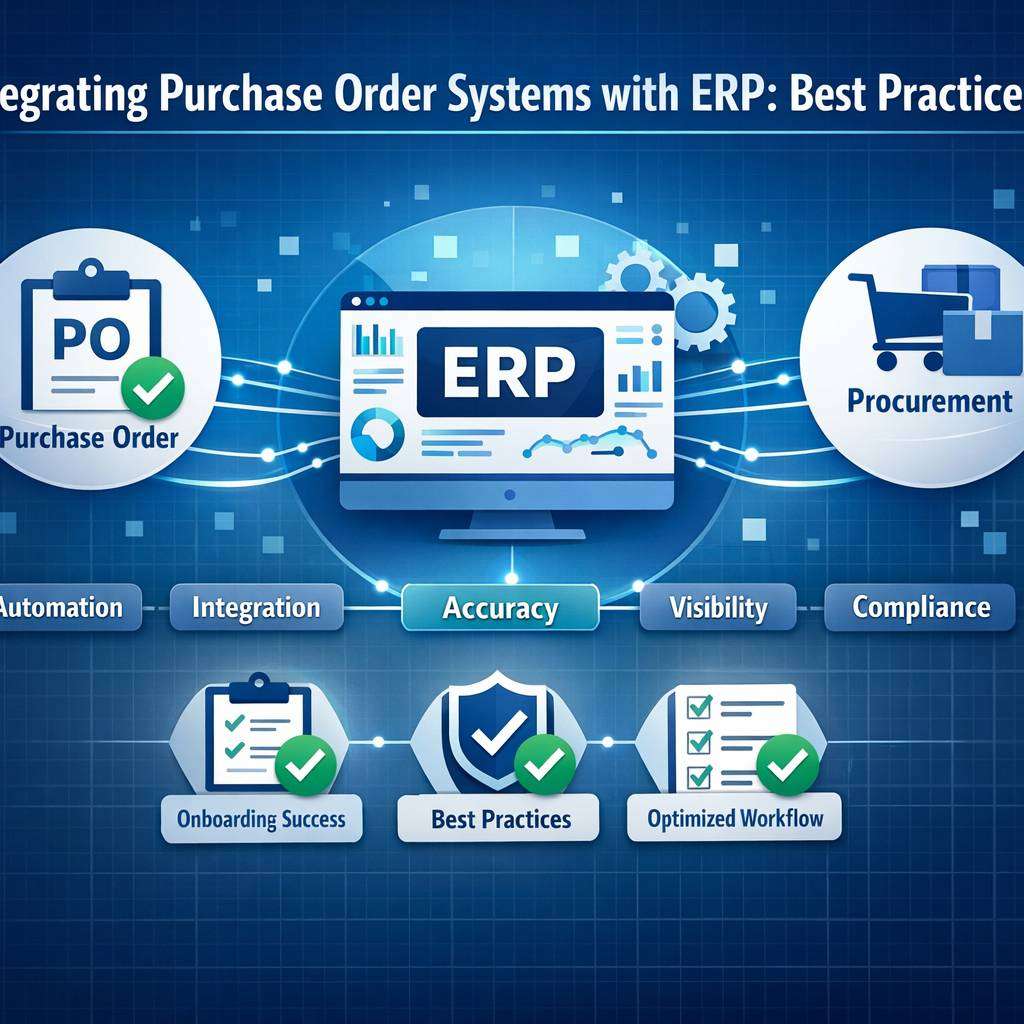
IntroductionEffective integration between purchase order systems and ERP is essential for streamlined procurement, improved data accuracy, and enhanced financial control. When organisations align their po system with ERP, they gain real-time visibility into purchasing activity, better supplier collaboration, and stronger compliance with policy and budgeting. This article outlines best practices for integrating purchase order systems with ERP, covering governance, technical approaches, data management, and operating efficiencies.
purchase order systems
A well-chosen purchase order systems backbone supports end-to-end procurement processes—from supplier onboarding to goods receipt and payment. When integrating a purchase order system with your ERP, it is critical to document core requirements: order creation, approval workflows, budget checks, matching with invoices, and analytics. Decisions around whether to deploy on-premises, cloud-based, or hybrid po system influence data latency, security, and maintenance. The goal is a seamless PO lifecycle that feeds accurate data into the ERP, minimising manual re-entry and reconciliation.
Key considerations include:
- Standardised PO fields and taxonomy that align with ERP data models.
- Automated approval routes based on role, spend thresholds, and departmental rules.
- Real-time PO status updates visible to stakeholders across purchasing, receiving, and accounts payable.
- Audit trails that capture changes, approvers, and timestamps for compliance.
software for purchase orders
Selecting software for purchase orders requires a holistic view of integration capability, scalability, and vendor support. Look for:
- Robust APIs and pre-built connectors to major ERP platforms.
- Support for e-invoicing, digital signatures, and supplier portals.
- Data mapping tools to reconcile PO data with ERP master data, including item codes, units of measure, and tax codes.
- Security features such as role-based access, encryption, and regular vulnerability assessments.
A best practice is to run a pilot with a small cross-functional team to validate data flows, exception handling, and reporting before wide rollout. Ensure the software for purchase orders aligns with overarching IT standards, including change management, incident response, and backup procedures. Clear governance around versioning and release management helps prevent ERP data discrepancies as updates occur.
po system
The po system acts as the central point for procurement document management. When integrating with ERP, focus on data integrity, timing, and harmonisation. Consider:
- Master data alignment: ensure item codes, supplier master data, and chart of accounts are consistent between systems.
- Purchase order lifecycle synchronisation: creation in the po system should trigger an ERP update, with status and receipt information flowing back to the PO.
- Exception handling: define clear paths for split orders, backorders, partial receipts, and cost variances.
- Matching policies: three-way matching (PO, received goods, and supplier invoice) should be supported and clearly configured in both systems.
Operationally, the po system should provide actionable dashboards and alerts for procurement teams, accounts payable, and budget owners. A well-integrated po system reduces cycle times, improves order accuracy, and enhances cash flow visibility.
online purchase orders
Online purchase orders extend accessibility and collaboration beyond the procurement team. Integrations should ensure secure, real-time data exchange between suppliers and the ERP-enabled PO workflow. Best practices include:
- Supplier portal integration: allow suppliers to receive PO updates, acknowledge orders, and submit digital invoices.
- Real-time notifications: automatic alerts for PO approval requests, changes, or deviations from contract terms.
- Data validation: require standardised data formats for line items, quantities, prices, and delivery dates to minimise downstream reconciliation work.
- Electronic requisition-to-order flow: enable departments to requisition items online, with appropriate budget checks and approval routing feeding into the ERP.
Security is paramount with online purchase orders. Implement multi-factor authentication for supplier access, encryption in transit and at rest, and regular access reviews to ensure only authorised users can view or modify POs.
purchasing order system
The purchasing order system, when integrated with ERP, should deliver consistent, mapped data across the procurement-to-pay process. Focus areas include:
- Data governance: maintain a single source of truth for supplier, item, and financial data. Regular data cleansing and deduplication prevent mismatches.
- Currency and tax handling: ensure correct currency conversion and tax determination according to jurisdiction, with alignment to ERP tax rules.
- Workflow automation: configure approvals, budget checks, and order fulfilment steps to mirror organisational policies. Automations reduce manual intervention and errors.
- Reporting and analytics: provide cross-system reports on spend by supplier, category, and department, with drill-down capabilities to source documents and approvals.
A strong purchasing order system integration supports process standardisation across locations and business units, driving procurement efficiency while maintaining financial control and auditability.
Discover how purchase order systems streamline procurement, automate approvals, and reduce errors. When you upgrade to modern software, you gain real-time visibility, better supplier collaboration, and cost controls. For more options and insights, visit https://cloudb2b.co.uk/ to compare features and pricing across providers.
online purchase order system
An online purchase order system emphasises accessibility and collaboration. Integration should prioritise:
- Bidirectional data flow: POs created online should populate the ERP with correct accounting codes, while updates from ERP (like receipt and payment status) reflect back in the online system.
- Supplier enablement: enable suppliers to submit invoices electronically, view payment status, and receive performance metrics.
- Compliance features: enforce contract terms, unit of measure standardisation, and price validation to avoid maverick purchasing.
- Performance governance: monitor SLAs with suppliers, delivery performance, and issue resolution times to support continuous improvement.
Aligned online purchase order systems empower users to manage procurement more effectively while preserving control and compliance within the ERP framework.
Best practices for integration
- Define a clear data model alignment between PO and ERP, including item master data, supplier records, and chart of accounts.
- Choose integration middleware or built-in ERP connectors that support real-time or near-real-time data exchange and robust error handling.
- Establish end-to-end testing, including unit, integration, and user acceptance testing, with representative scenario coverage.
- Implement strong data governance, including master data management, data quality metrics, and routine audits.
- Plan change management meticulously, with detailed documentation, training, and staged rollout to mitigate disruption.
In summary, integrating purchase order systems with ERP requires careful planning, robust data practices, and thoughtful protocol design. By focusing on data alignment, lifecycle synchronisation, and secure, scalable online processes, organisations can realise faster procurement cycles, better spend visibility, and stronger financial control across the enterprise.
< a class=”cpt-link” href=”https://community.shopify.com/c/shopify-discussions/what-s-the-best-external-system-for-managing-high-volume/td-p/933668″>https://community.shopify.com/c/shopify-discussions/what-s-the-best-external-system-for-managing-high-volume/td-p/933668 – Explore purchase order systems that streamline procurement, improve visibility, and ensure accurate supplier communication, inventory alignment, and timely approvals across departments for scalable, efficient business operations and cost control.